Bottom line: Extreme dry weather is here with worst impact on volumes & prices in 2027. The National Oceanic and Atmospheric Administration (NOAA) has predicted the occurrence of a very strong weather pattern, coined by the market during 2015-16 super event as “Godzilla El Niño”. NOAA has upgraded the current developing El Niño (Figure 2) to be the kind that in history had adversely impacted regional agriculture with sugarcane yields dropping 7% in 2015 (Figure 3) and soft-commodity prices spiking (Figure 4). While Indonesia’s rice inventories are substantially higher than in 2015/16, reserves are sufficient for only 1.6 months of consumption in 2025/26 and 1.3 months in 2026/27E, the second lowest in the region (Figures 5 & 6), according to the USDA. While Indonesia has higher rice reserves than Vietnam; however, its production exceeds consumption by 18%, providing greater scope than Indonesia to rebuild reserves if exports were curtailed.
The event: Rising to 81% probability and 97% odds for occurrence until early 2027. "Godzilla El Niño" is sufficiently strong to push central Pacific sea temperatures more than 2°C above normal with warming of this size redrawing rainfall patterns across tropics: wet where it is normally dry, dry where it is normally wet. NOAA now puts the odds of reaching that “very strong” level at 81% for Oct–Dec 2026, up from 62% in June 2026 forecast and just 33% in the May 2026 forecast (Figure 2), and 97% odds that event persists into early 2027, which would rank it among the worst since 1950. Major forecasting models, including US and European, have all revised warmer patterns every month and now cluster around Sep-Nov 2026 peak, creating unusually high confidence. Two closest historical matches, 1997-98 and 2015-16, both cut global crop yields materially. Rainfall activities over Indonesia is already suppressed, bringing classic early drought warning for the archipelago (Figures 8 & 9). Humanitarian Data Exchange suggests that West Sumatera is already experiencing 10-day rainfalls of 34mm (Figure 9) vs. 75mm 2015-2016 average.
BMKG unambiguous: 2026 dry season runs drier than 30-year normal with inflation risk. Indonesia’s Weather Bureau (BMKG) has expected for stronger dry season, longer and drier than 30-year normal with the latest expectation for c.56% of the country to experience low rainfalls and peaks in Aug-Sep across Java, Bali, Nusa Tenggara, Sulawesi, and southern parts of Sumatra, Kalimantan, and Papua. Beyond agriculture and water stress, BMKG explicitly flags “karhutla” (forest-&-land fires) as well as haze risk and air-quality with respiratory-health costs, and pressure on regional inflation (Figure 10).
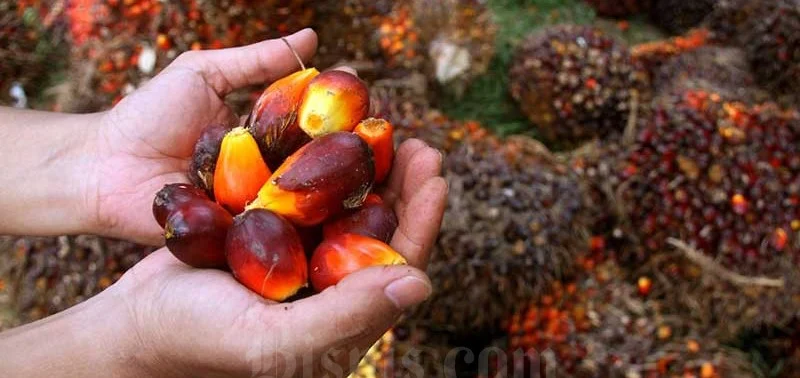
GAPKI: c.30-50% jump in fertilizer costs, output constraints to worsen CPO production. There is a lag to oil-palm yield response to drought: water stress at Aug-Sep peak depresses FFB bunch formation and extraction rates 6-12 months out, making production trough lands in 2027, not 2026. GAPKI already warns of lower CPO production due to: 1) El Niño plus c.30-50% jump in fertilizer costs (Iran war) could cut 2026 output 1-2 mn tons off 2025 base of c.51.7 mn tons (+7.3% YoY); 2) Yield hit from smallholders (37% of planted areas) postponing fertilizer compounds; 3) Land confiscations (c.3.3 mn ha seized, 1.5 mn ha oil-palm transferred, 2-5 mn tons at risk), B50 and DSI export regime to limit CPO supplies.
Sensitivity analysis: Every 10% CPO price hike = 37% higher average 27F net profit. Leading up to the upcoming Godzilla El Niño, we expect significant CPO price increases to occur going forward. With Oil World (via MPOC) seeing Indonesian exports down as much as 1.7 mn tons in 2Q-3Q, CIF Rotterdam price already averaged USD1,356/t in 1Q26 (vs c.USD1,230 a year earlier), MPOC pegs prices firm around RM4,400/t, and bull case runs to USD1,500/t on B50 plus El Niño. Thus, setup for upstream producers is the classic El Niño trade: volumes down, prices up, and historically CPO equities outperform on price leverage even as tonnage slips. Based on our sensitivity analysis, every 10% CPO price hike = 37% higher average 27F net profit (Figure 11) with AALI as the biggest beneficiary.